jueves, 23 de junio de 2022

What to do when faced with a megalomaniac?

What to do when faced with a megalomaniac?

Megalomania is quite common. It can be very annoying for those around you. Tips for living with a megalomaniac.

What is megalomania?

Megalomania corresponds to a hypertrophied pride. This psychopathological illness is part of the narcissistic personality. It is expressed by an overestimation of oneself which makes the megalomaniac attribute prestigious actions, exceptional gifts, unlimited love affections, unsuspected wealth.

Megalomania is often the result of a narcissistic personality disorder. It may be reinforced by paranoia or schizophrenia.

Megalomania, to varying degrees, is quite common. This self-expansion is quite exemplary in artists, dictators and great politicians. As our society pushes individuals to become more and more self-centred, megalomaniacs are becoming more and more numerous.

Megalomania is often linked to emotional deficiencies in childhood, where self-esteem could not be acquired in a solid way.

The symptoms of megalomania

A megalomaniac feels superior, more talented, more beautiful, more important than everyone else. He or she thinks that he or she has the glory and the power. He or she is often delusional and delusions of grandeur. One megalomaniac thinks he is a great actor, another sees himself as Napoleon Bonaparte! In extreme cases, megalomaniacs have hallucinations.

Cognitive and behavioural therapies can improve the behaviour of megalomaniacs. Psychoanalysis can also help. But most of the time the megalomaniac does not seek treatment because he/she thinks he/she is better than the therapists!

Living with a megalomaniac is complicated

Megalomaniacs think that they are entitled to everything. They believe that they can do anything they want and that their desires must always be fulfilled. Opposing them can lead to crises. The people around them are at their disposal. Megalomaniacs lack empathy. They are so focused on themselves that they do not pay attention to the feelings of others.

In addition, megalomaniacs are haughty, arrogant, and need to be admired.

All this makes them difficult people to deal with, whether in a family, friendship or professional setting!

What to do when faced with a megalomaniac?

If you have a megalomaniac in your circle, show approval only when it is sincere and deserved and explain why others do not find them as exceptional as they think.

If you want to criticise her, it is better not to attack her as a person but to criticise one of her behaviours in particular.

Be aware of her attempts to manipulate you, whether through fear ("Be careful if you..."), flattery ("You are the best") or guilt ("After all I have done for you...").

Do not expect reciprocity, give and take. The megalomaniac expects to receive a lot, but will not give you back what you give, because everything is due to them, they deserve what you give them.

You may also like to read / También te puede interesar leer

Adblock test (Why?)

miércoles, 22 de junio de 2022

Mejora tu pronunciación en inglés con esta app.

Tanto en este blog como en nuestro podcast ENGLISHWAYRD, hablamos constantemente de formas en las que puedes mejorar tu inglés solo, dígase consumiendo contenido en inglés, grabación a ti mismo leyendo en voz alta, usando la técnica de la imitación y leer a la vez que escuchas a una persona hablando ingles entre otras pero cabe destacar que todas estas técnicas de estudio requieren tiempo y mucha dedicación y siempre hablamos de la motivación porque si tienes una motivación y te gusta el idioma el inglés, entendemos que se te hará fácil y hasta divertido aprender inglés usando todas estas técnicas pero que si te digo que desde hace ya unos 5 meses he testeado personalmente de forma sigilosa una app que es capaz no solo de proveerte la práctica que necesitas si no también de corregirte cuando cometes errores y calificar tus avances y brindarte datos sobre tu aprendizaje que te ayudarán a mostrar tu progreso? ¿Grandiosa, no? Pues si, ELSA SPEAK es una app que es más bien como una tutora de inglés en tu bolsillo 24/7!

Elsa speak es una app super completa que como profesor de inglés recomiendo como un recurso que todo estudiante de inglés debe usar si quiere avanzar mucho más rápido en su meta de aprender inglés. 

Aquí algunos datos sobre esta app: 

  • Más del 90% de las personas que la usan ven mejoría en su pronunciación. 
  • Más del 95% de los usuarios se muestran más confiados al hablar inglés cuando usan esta app. 
  • Más 60% sienten que hablan más claro después de usar esta app. 

Que esperas para unirte a millones de personas que ya usan ELSA SPEAK para aprender inglés? 

Descárgala en tu Android o iPhone dándole clic al botón!

Adblock test (Why?)

martes, 21 de junio de 2022

European Music Day - June 21

European Music Day

A major international event that has been repeated every year for more than a quarter of a century will take place again this year in many countries around the world. Mark your calendars: on 21 June, La Fête de la Musique, one of the most important cultural celebrations ever held. Where is this event? Everywhere. In fact, wherever you want it to be. This was the philosophy behind the very first edition, when, from the French Ministry of Culture, Maurice Fleuret, music writer, journalist and critic, as well as one of the initiators of this festival, opened the ball by saying: "Music everywhere, the concert nowhere".

In an organic way, in squares, public places, schools, museums, in the streets and even in airports, Music will be the protagonist of a strong message of universal accessibility, of an invitation to travel, of communion and communication between every people and culture. All of this is highlighted by the fundamental significance of the date, the Summer Solstice, literally the longest day of the year, whose intrinsic importance is often overlooked, rooted in history since ancient civilisations. So here we take you on a journey through a history rich in meaning and ideas.

The origins of the Fête de la Musique

The real spark for this event came in 1976. It was the American Joel Cohen, at the time a producer for Radio France Musique, who conceived the idea with his "Saturnales de la Musique". Cohen proposed a nocturnal opening of the radio programme on 21 June and 21 December, the days of the summer and winter solstices respectively, by inviting all musicians, professionals and amateurs, to take to the streets and play spontaneously. The project was carried out in Toulouse and Paris on 21 June 1976: during the longest night of the year, the radio broadcast a live recording of these events.
In 1982, a major survey on cultural musical practices, conducted by the Ministry of Culture, showed that 5 million people (including one young person in two) play a musical instrument, but that only a minor part of them are involved in musical events. Based on these deductions, Maurice Fleuret, music critic and newly appointed Director of Music and Dance at the Ministry of Culture, headed by Jack Lang, invited the government to take into consideration the country's growing musical culture.

Taking up Cohen's concept and evoking a kind of "democratisation of sound", Fleuret imagined a major popular event that would allow the whole varied, multi-ethnic, multidisciplinary landscape to be known and highlighted. The first Fête de la Musique was held from 20.30 to 21.00 on 21 June 1982, a symbolic day that recalls the pagan rites and the ancient tradition of the Fêtes de Saint Jean.

The invitation was received loud and clear, and the half hour planned by the Ministry was far exceeded. The slogan was conceived in 1983, "Make music!" from the homophony with the name of the Festival. In short, a double incentive, both to create music and to live it, and from these "simple" instructions, important results are produced.
Thanks to the organisation of numerous free concerts, a wider public can finally access all kinds of musical genres (classical music, jazz, rock, world music, rap, traditional music...). In addition, new talents are emerging as well as new "popular" genres that can break out of the usual "ghetto", such as rap, hip hop, African and Caribbean minority music, or traditional regional music renewed in a game of influences and experimentation.

Since its launch, its success has never been denied. In France alone, the Fête de la Musique allows the organisation each year of more than 18,000 concerts throughout the country for about 5 million musicians, bringing together nearly 10 million spectators. The first developments in various European countries took place in 1985 on the occasion of the European Year of Music and it became a real social phenomenon. The event took on an international air in 1995, the year in which a true European Charter for the Fête de la Musique was established, in order to demonstrate, through common principles, the desire to promote a better knowledge of the artistic realities of the member countries and to strengthen multilateral exchanges between musicians in Europe.

Berlin, Budapest, Barcelona, Istanbul, Liverpool, Luxembourg, Rome, Naples, Prague, the French Community of Belgium and Santa Maria da Feria signed the charter of founding principles, including respect for the free nature of the festival and the date: the European Music Festival takes place in each country on 21 June.

⇒ Letras y videos de Canciones en Inglés - Lyrics

Adblock test (Why?)

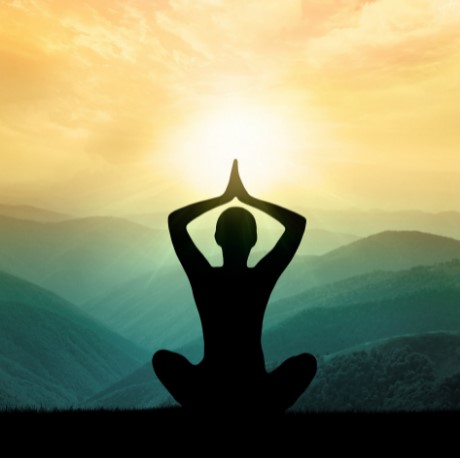
International Yoga Day - June 21

International Yoga Day

International Yoga Day: 5 good reasons to practise yoga

21 June is not only Music Day, but also International Yoga Day. Discover the five main benefits of this ancient Indian discipline that is good for the body and mind.

"Yoga" means union, the union of body and consciousness, and of consciousness and soul. Yoga cultivates the means to maintain a balanced behaviour in daily life and gives weapons to move forward". This beautiful statement on the benefits of yoga was made by the Indian representative to the United Nations in December 2014, during the vote that established an International Yoga Day every 21 June. Yoga is also on the list of Intangible Cultural Heritage of Humanity, created by Unesco.

Regardless of the type of yoga practised, its benefits in terms of physical and mental fitness are undeniable...

1- Yoga helps to manage stress better

By focusing on your breathing, your body and the movements you do, you release bad tensions and take a step back from everyday anxieties. Yoga is particularly recommended for people suffering from stress-related sleep disorders.

2- Yoga strengthens and tones muscles.

Some stereotypes are difficult to get rid of: sometimes we imagine a yoga class as a room full of people meditating with their legs crossed. Although relaxation is important, yoga also involves a physical workout.

Slowly getting into a position, holding it, coming out of it in the right way... this work is not easy. Yoga works muscles that are not normally used, such as the inner legs and arms, and strengthens the whole body.

3- Yoga helps to keep your spirits up

In addition to increasing the feeling of well-being, yoga also provides an important help from the point of view of mental health. According to a study conducted in 2017 by US researchers, the practice of yoga would even be an alternative to medication to treat emotional disorders and depression, especially during pregnancy.

4- Yoga improves flexibility and balance

Contrary to another widely held belief, you don't have to be flexible to do yoga: you become flexible. Working on your breathing and exhalation allows you to soften your body gently, without hurting yourself.

Several positions are also designed to develop balance. A workout that will be useful throughout the day to maintain a better posture.

5- Yoga boosts the immune system

By strengthening the body and helping to combat stress, yoga improves the immune system. No more recurring colds, excess toxins and digestive problems.

Adblock test (Why?)

Summer solstice, 21 June - International Day of the Sun

21 June, Summer solstice - International Day of the Sun

What is the summer solstice?

The Earth rotates every day around itself, but it also rotates around the Sun. A rotation that lasts for a year, but because the earth's axis of rotation is slightly tilted. This means that we are more or less far away from the sun. In summer, the tilt of the northern hemisphere towards the sun is at its maximum. These rays hit us more directly. Consequently, it gets hotter and our exposure is longer until the famous summer solstice, which is the day when the northern hemisphere is closest to the sun.

Recognising that the solstices and equinoxes symbolise the fertility of the earth, agricultural and food production systems, cultural heritage and its age-old traditions, the United Nations General Assembly recognised that the celebration of these events embodies the unity of cultural heritage and age-old traditions and also plays an important role in strengthening ties between peoples on the basis of mutual respect and respect for human rights, the ideals of peace and good neighbourliness. It therefore recognised 21 June as International Solstice Celebration Day by adopting resolution A/RES/73/300.

What are the symbols surrounding this day?

For centuries, this peak of the solar cycle has been accompanied by superstition. Farmers celebrate the beautiful season, the longer days that allow them to work the land longer and hope for a good harvest. They pay homage to the fertility of the earth and the power of the sun, bearer of warmth and light. A sun that architects have always played with, as at the prehistoric site of Stonehenge in England, where the sun rises in a stone arch on the day of the summer solstice.

A game that also exists with the pyramids of Egypt or with the basilica of Vézelay where a path of light is drawn on the building at this time of the year.

How is the summer solstice celebrated today?

Traditionally, it is the feast of Saint-Jean that welcomes the summer. Originally a pagan festival, it has been Christianised. It is celebrated on 24 June for the birth of John the Baptist, and is accompanied by large bonfires, symbols of the power of the sun, but also by rounds and dances. #SummerSolstice #Summer #Solstice.

International Day of the Sun

World Solar Day is celebrated on 21 June, coinciding with the onset of the summer solstice and the arrival of longer and brighter days.

The main objective of this day is to show the world's population the importance of the existence of this star at the centre of the solar system in our lives, as well as to promote the use of clean and non-polluting renewable energies.

Sun Day events and activities are celebrated all over the world, but especially in the northern hemisphere.

A star that shines brightly

The sun is the centre of our solar system. It is one of the many stars in our galaxy. At its centre there is intense activity: the temperature is 15 million degrees Celsius!

The distance from the Earth to the Sun is only 150 million kilometres. Its light takes only eight minutes to reach us, while the light from Sirius, the brightest star in our sky after the Sun, takes eight years.

An average star

The Sun is a huge gaseous sphere 1.4 million kilometres across. It was born about 4 billion years ago from the gravitational collapse of a cloud of hydrogen and helium. The Sun will continue to give us its light and warmth for a long time to come: between 4 and 5 billion years! So we still have plenty of time to enjoy its beneficial rays.

Humanity and the sun...

We all know that the earth revolves around the sun, but before Copernicus' discovery in the 16th century, men were convinced that the opposite was true. Long before it was rationally studied, the sun was the subject of many myths. Thus, for the ancient Greeks, the light of the sun was produced by the god Helios driving the solar chariot... The ancient Egyptians celebrated the sun in the form of the god Ra, the most important of all, as did the Aztecs, who also worshipped the sun. Today sun worship has disappeared, but people still celebrate the sun as an irreplaceable source of life.

Reasonable exposure to the sun has many positive effects on our health. Firstly, we feel an inimitable sense of well-being when the sun's gentle rays bring warmth and light to our bodies. This natural light is also a powerful anti-depressant, which explains why our mood is often better in summer. In addition, the sun's rays promote the production of vitamin D by our body. This same vitamin D will in turn allow the assimilation of calcium, which is so beneficial for our bones.

However, the benefits of the sun are also accompanied by well-known dangers. Indeed, the sun emits ultraviolet rays, UV rays, which cause painful sunburns, but are also responsible for premature skin ageing and, in the most serious cases, cancers. #InternationalSunDay #SunDay.

Adblock test (Why?)

lunes, 20 de junio de 2022

Buckingham Palace, London. Information about London

Buckingham Palace, London tourism, guide to London in English. Travel to london.

Buckingham Palace has been the official residence of the English Royal Family since 1837, when Queen Victoria took up residence here three weeks after her coronation. It is currently home to Queen Elizabeth II.

The original building was built in 1705 as a country house by John Sheffield, the Duke of Buckingham. In 1761 King George III bought the house for his wife and renovated it. In 1826 King George IV decided to convert the house into a Royal Palace but he and his successor died before the building was completed. Queen Victoria finally moved into the palace and it has been the official residence of the English monarchy ever since.

The palace was extended in 1850 with the addition of the east wing, where most of the palace's rooms and a large ballroom 40 metres long were added. The main façade facing St. James's Park dates from 1913.

Queen Elizabeth II and Philip Mountbatten (Duke of Edinburgh) occupy part of the palace, although the rest is used for official events and as residences for some officials. The palace has 600 rooms, a throne room, a ballroom, a picture gallery, a swimming pool and a large garden.

The use of space is approximately as follows: 52 rooms for the Royal Family and guests, 188 rooms for service personnel, 78 bathrooms and 92 offices.

Some of these rooms can be visited during the months of August and September when the Royal Family is not at the palace. The tour includes a total of 19 rooms such as the Throne Room, the Queen's Gallery and the Ballroom, where lavish state banquets are held. The tour also includes a walk through the palace garden.

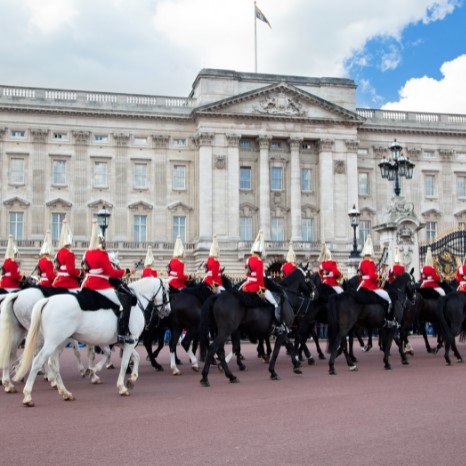
Changing of the Guard

One of the daily activities at Buckingham Palace that attracts the most curiosity from tourists and has become quite a spectacle is the Changing of the Guard. The Changing of the Guard takes place at 11:30 am at the main entrance of the palace. The changing of the guard takes about 45 minutes and is accompanied by military music played by a band of soldiers.

Location: London SW1A 1AA, Reino Unido +44 303 123 7300

Underground with stop at Green Park, Victoria, Hyde Park Corner o Scotland Yard.

También te puede interesar leer:

Adblock test (Why?)